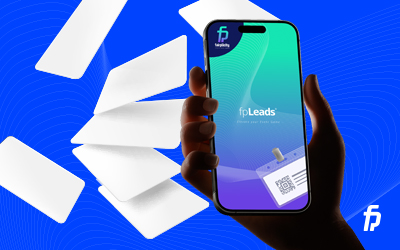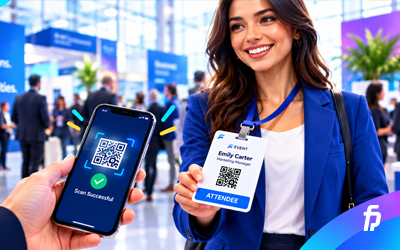

For decades, trade show lead retrieval was a hardware business.
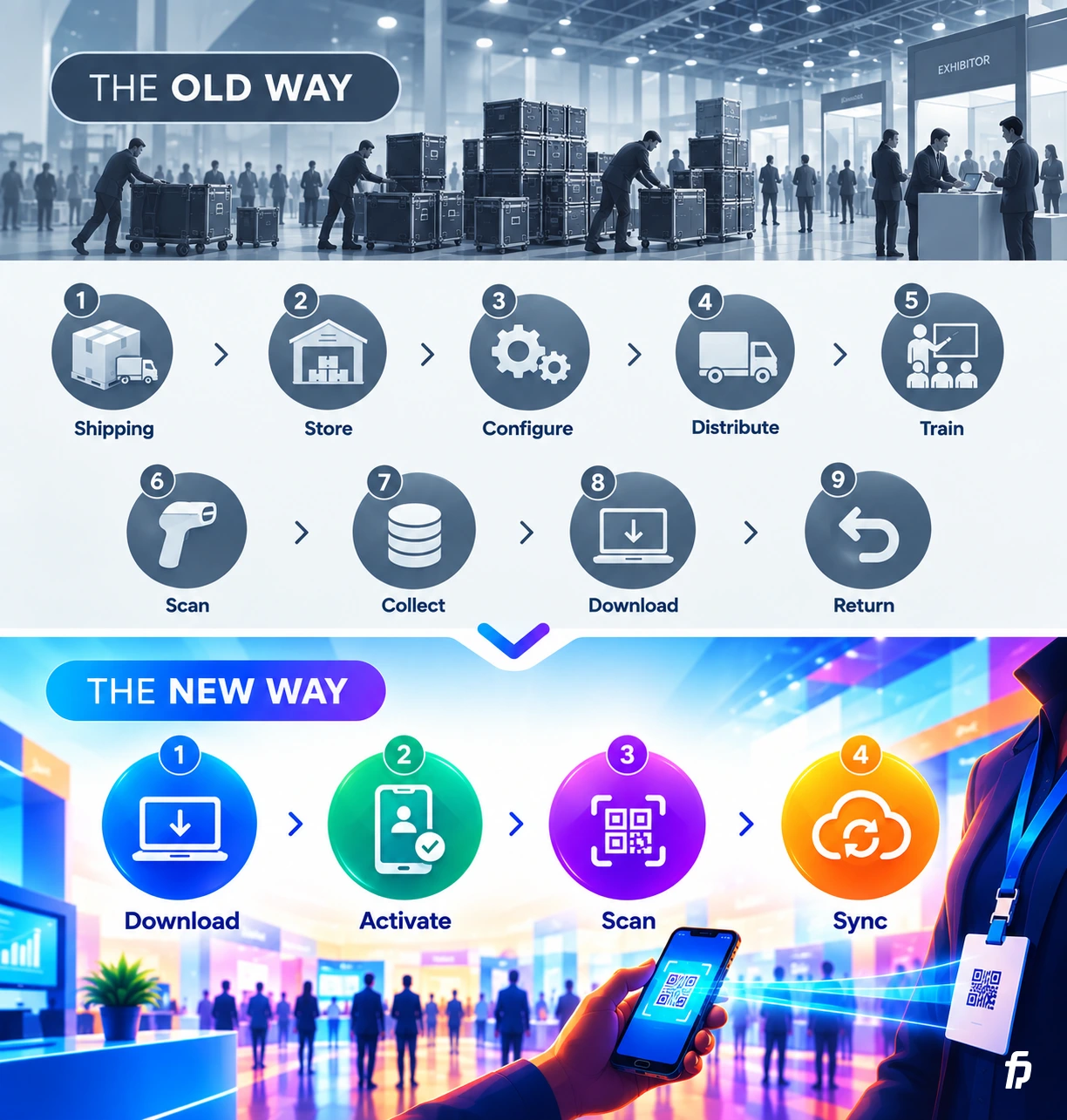
If an exhibitor wanted to capture attendee information, they needed a specialized lead retrieval device. That device had to be shipped to the event, stored, configured, distributed, powered, learned, collected, and eventually returned.
The technology captured leads. But everything surrounding the technology created operational cost and friction.
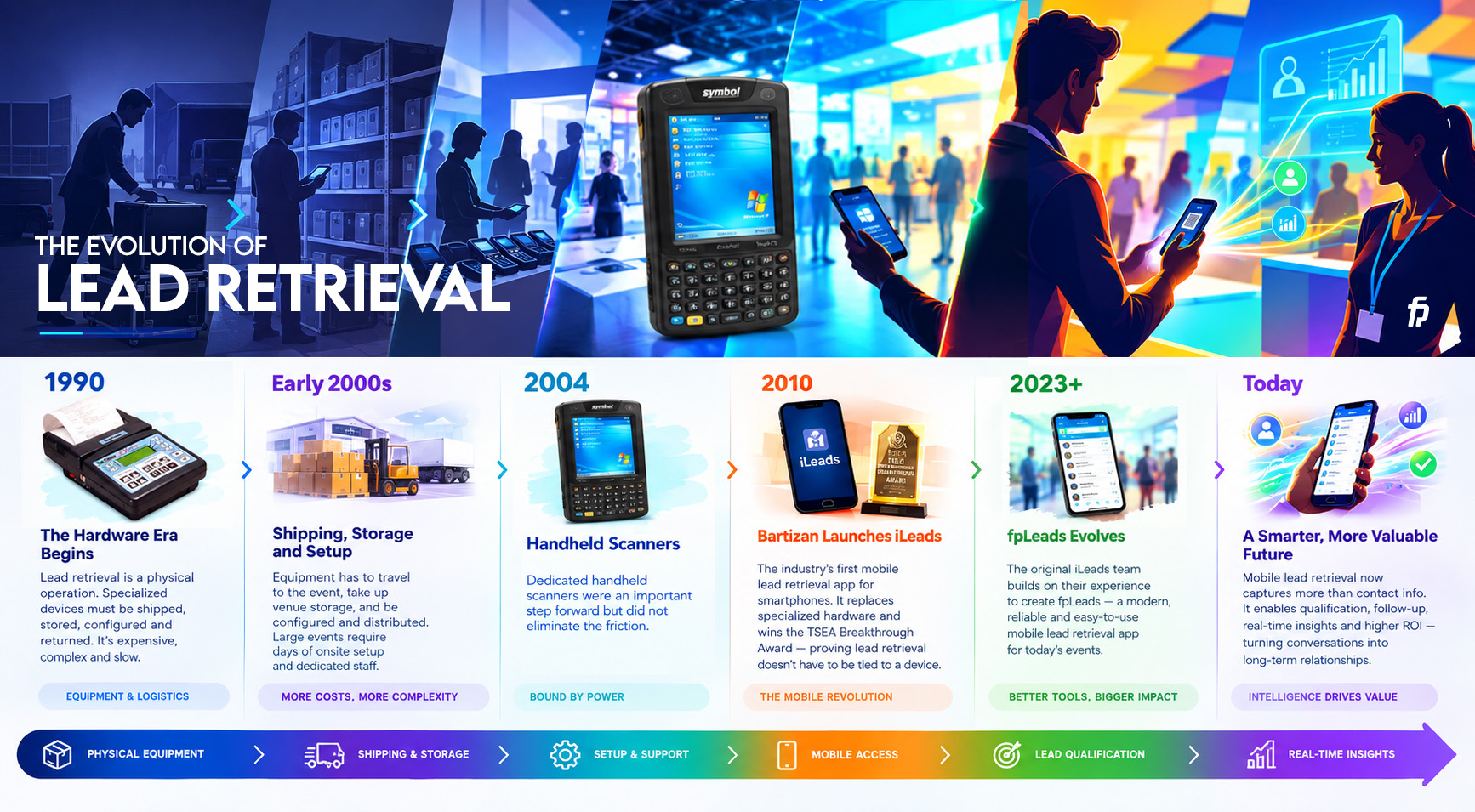
Then, in March 2010, something changed!
Bartizan released iLeads, the industry's first mobile lead retrieval application for smartphones. It replaced specialized lead retrieval hardware with something exhibitors were already beginning to carry everywhere: a smartphone.
The innovation was recognized with a Breakthrough Award from TSEA (Trade Show Exhibitors Association).
More importantly, iLeads demonstrated that lead retrieval didn't have to be tied to a piece of equipment sitting at the booth.
The original development team behind iLeads later went on to create fpLeads, bringing the lessons learned from the early days of mobile lead retrieval into a modern, reliable, easy-to-use lead retrieval app.
The journey from hardware to mobile fundamentally changed how exhibitors capture leads and how organizers can offer lead retrieval at events.
Before Mobile Lead Retrieval, Lead Retrieval Was a Hardware Operation
Before mobile apps, lead retrieval was largely an equipment and logistics operation.
A typical event required specialized devices to be prepared and delivered to exhibitors. For large conferences and trade shows, that could mean hundreds or even thousands of units.
The actual scanning of a badge might take only seconds.
Getting the equipment into the hands of exhibitors was the complicated part.
Mobile Lead Retrieval Changed the Economics
Once lead retrieval became an app, many of the costs associated with specialized hardware could be dramatically reduced or eliminated.
There was no longer a need to ship a dedicated scanner to every exhibitor.
There was less equipment to store.
There was less hardware to configure and distribute.
There was no dedicated scanner requiring booth power.
There was no equipment pickup process.
There was no equipment return line.
And exhibitors no longer needed to wait for their lead data to be downloaded from a physical device.
Mobile Lead Retrieval Made Lead Retrieval Practical for Smaller Events
Traditional hardware-based lead retrieval had a significant fixed operational cost.
When you have to ship equipment, prepare it, store it, distribute it, train exhibitors, collect it, process it, and ship it back, there is a minimum level of event activity needed to justify the operation.
That made lead retrieval much harder to offer economically at smaller conferences and trade shows.
Mobile lead retrieval changed that equation.
When the lead retrieval system is primarily software, the incremental cost of adding another exhibitor is dramatically different from shipping and supporting another physical device.
As a result, even smaller events can offer lead retrieval to exhibitors without requiring a minimum number of lead retrieval rentals.
This opens lead capture to conferences and trade shows that previously might not have had enough exhibitors to justify a traditional hardware-based lead retrieval operation.
For organizers, that means lead retrieval can become part of the event technology offering without requiring the same physical infrastructure.
For exhibitors, it means professional lead capture isn't limited to the largest trade shows.
The Exhibitor Was No Longer Tethered to the Booth
This is where mobile lead retrieval really changed the exhibitor experience.
The scanner could now go wherever the exhibitor went.
A lead could be captured:
• At the booth
• During a session
• At a networking event
• At a reception
• In a hallway
• In a lounge
• During a meeting
• Anywhere an attendee conversation takes place
The booth was no longer the boundary of lead capture.
The scanner was in the exhibitor's pocket.
That simple change opened up an entirely different approach to exhibitor lead capture.
Mobile Made Lead Qualification More Natural
The evolution didn't stop with scanning.
Touchscreens made it dramatically easier to interact with lead information.
Instead of cumbersome typing on dedicated hardware, exhibitors could use a smartphone or tablet to add notes, answer qualification questions, select follow-up actions, and capture information about the conversation.
And with speech-to-text technology, an exhibitor can even dictate a note rather than typing it.
That changes the value of lead retrieval.
The exhibitor doesn't have to wait until they return to the office to remember what happened.
They can record the information while the conversation is still fresh.
Capture and qualify at the same time.
That matters because the most useful lead information often isn't the attendee's name, company, and email address.
It's the context.
What were they interested in?
What product or service did they ask about?
What should happen next?
How quickly should someone follow up?
Mobile lead retrieval makes it easier to capture those details while the exhibitor is still on the show floor.
Instead of calling through a list of leads days or weeks after the event to determine which contacts were actually valuable, exhibitors can begin the qualification process during the event.
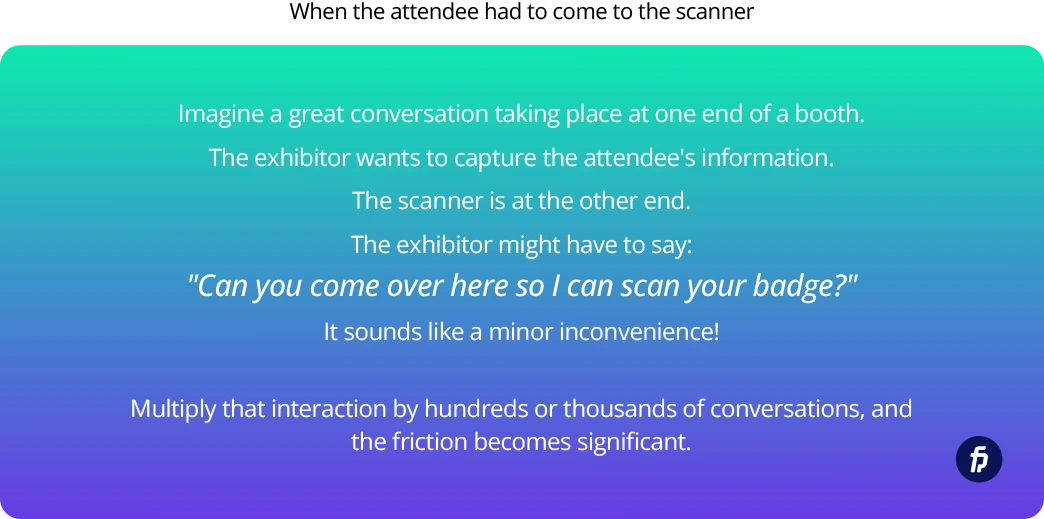
Offline Lead Retrieval Removed Another Source of Friction
- Large conferences and trade shows can put enormous demands on venue Wi-Fi networks.
- Thousands of attendees and exhibitors may be using mobile devices simultaneously.
- A modern mobile lead retrieval app can address this by supporting offline lead capture.
- Attendee information can be available on the device, allowing the exhibitor to scan and capture leads even when connectivity is unreliable.
- The lead retrieval app doesn't have to stop working simply because the venue network has a bad moment.
- Leads can synchronize when connectivity becomes available.
- The technology adapts to the event instead of making the event adapt to the technology.
From iLeads to fpLeads
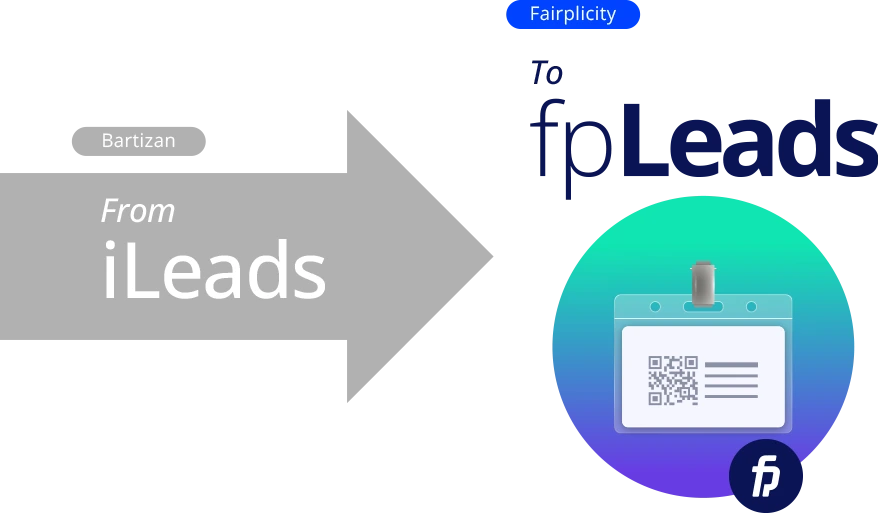
The original development team behind iLeads didn't stop learning when mobile lead retrieval became a reality.
Those early years provided firsthand experience with what exhibitors actually needed—and what could create friction.
That experience eventually went into fpLeads.
fpLeads was designed with those lessons in mind:
• Keep lead capture simple.
• Make scanning fast.
• Make the interface easy to understand.
• Minimize the steps required to capture a lead.
• Make qualification practical.
• Make adding notes easier.
• Support unreliable Internet connectivity.
• Give exhibitors the flexibility to capture leads wherever conversations happen.
• Give organizers real-time visibility into event activity.
• Make the system reliable enough for high-pressure events where there is no room for error.
The goal isn't to recreate the old hardware experience on a phone.
It's to take what was learned from the hardware era and the early mobile era and build a solid, reliable, easy-to-use lead retrieval app around the way exhibitors actually work.
Lead Retrieval Became Event Intelligence
Once lead retrieval stopped being simply a scanner, it became possible to think about the data differently.
An exhibitor doesn't just need a list of people who scanned their badges.
They need actionable information about those interactions.
Who visited?
What were they interested in?
How was the lead qualified?
What follow-up is required?
What notes were captured?
Which leads require immediate attention?
For organizers, the data can provide another perspective on the event.
Lead retrieval can provide visibility into exhibitor engagement and attendee activity, helping organizers demonstrate the value of the event to exhibitors.
The scanner became a data collection tool.
The app became an event intelligence platform.
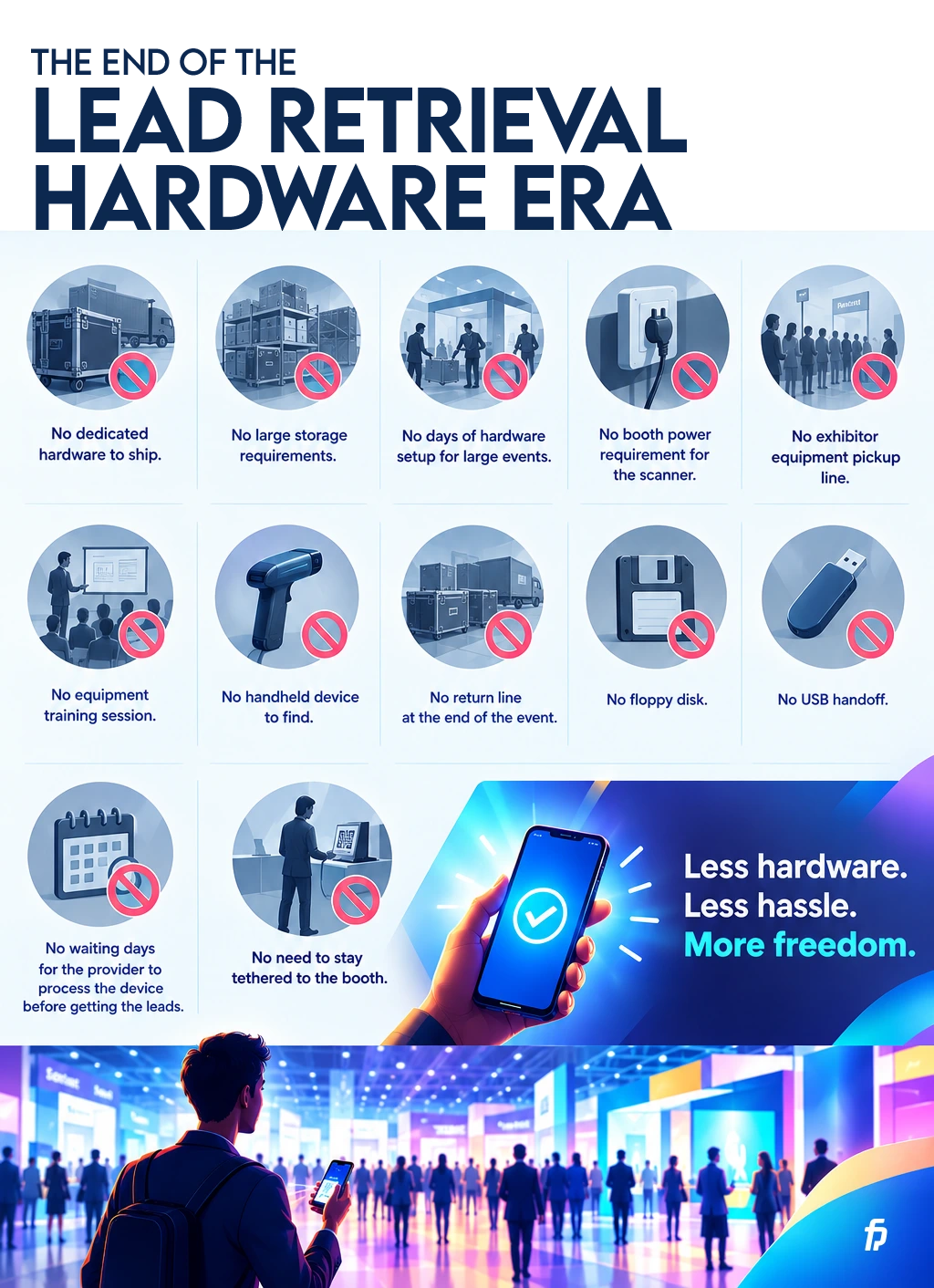
The transition from hardware to mobile didn't happen because smartphones were simply smaller scanners.
It happened because smartphones eliminated much of the infrastructure that made traditional lead retrieval expensive and cumbersome.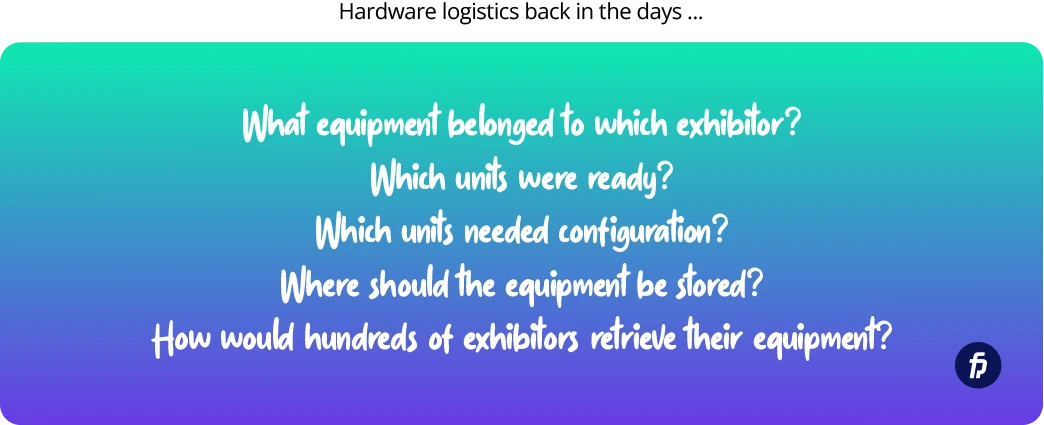
Cut the Cords. Capture More Leads.
The evolution of lead retrieval can be summarized in one simple transformation:
Yesterday, the exhibitor had to find the scanner.
Today, the scanner goes with the exhibitor.
Mobile lead retrieval changed the economics, logistics, and experience of trade show lead retrieval and conference lead retrieval.
It made lead capture more accessible to smaller events, reduced the operational burden of delivering the service, and gave exhibitors the freedom to capture and qualify leads wherever conversations happen.
And the evolution continues.
From the first mobile lead retrieval app, iLeads, released by Bartizan in March 2010, to today's modern lead retrieval platforms, the fundamental lesson remains the same:
The best lead retrieval technology is the technology that gets out of the way and lets exhibitors focus on the conversation.
That philosophy is at the heart of fpLeads.
Cut the cords. Capture more leads.
FAQs
What is lead retrieval?
Lead retrieval is an event technology solution that allows exhibitors to scan attendee badges and instantly capture attendee information, qualify leads, and export data directly into their CRM for fast follow-up.
Why is lead retrieval better than collecting business cards?
Lead retrieval provides richer attendee information, eliminates manual data entry, enables real-time lead qualification, and supports immediate CRM integration, resulting in faster follow-up and higher trade show ROI.
Why should event organizers offer lead retrieval?
Offering lead retrieval increases exhibitor satisfaction, improves exhibitor retention, creates additional revenue opportunities, and positions the event as a modern, technology-driven conference or trade show.
Does lead retrieval improve trade show ROI?
Yes. Faster follow-up, better lead qualification, and structured digital data help exhibitors convert more prospects into customers, improving the return on their event investment.